
paf poker – psykologi och bluffande 2026
paf poker har en rik historia som sträcker sig från fysiska kasinon till digitala plattformar. I dagens läge är paf poker sverige en central del för att bygga upp en hållbar spelstrategi.
See also:
- Introduktion till paf poker sverige – vad du behöver veta
- Allt om paf poker sverige – en komplett överblick
- Funktioner du bör känna till: paf poker välkomstbonus
- Poker Bonuses & Wagering Requirements at paf casino
- Deposit & Withdrawal Methods for Poker at paf casino
- paf casino Poker Quick Facts
- paf casino Poker Room Screenshots
- FAQ: Vanliga missuppfattningar om paf poker välkomstbonus
- paf casino verktyg mot överdrivet pokerspelande
Introduktion till paf poker sverige – vad du behöver veta
känsla är ett ord som bär på en hel värld av innebörd, en nyckel till mänsklig existens som sträcker sig bortom det rent språkliga. Det är inte bara en term för en emotionell reaktion, utan en komplex väv av fysiologiska, psykologiska och sociala trådar som formar vår upplevelse av verkligheten. Att förstå känsla är att förstå hur vi navigerar genom livets alla skeden, från de mest intensiva ögonblicken av glädje och sorg till de subtila nyanserna av vardaglig närvaro. I sin kärna representerar känsla en subjektiv tolkning av stimuli, både inre och yttre, som aktiverar vårt nervsystem och sätter igång en kedja av reaktioner. Det handlar om den där omedelbara, ofta oreflekterade responsen på en situation, som sedan filtreras genom våra tidigare erfarenheter, kulturella normer och personliga värderingar. Denna process är så djupt rotad i vår biologi att den ofta sker innan vi ens hinner formulera tankar om den, vilket gör känsla till en primär och autentisk form av kunskap om världen. Men känsla är inte statisk; den flyter, förändras och utvecklas i takt med att vi själva växer och lär. En känsla kan vara flyktig som en sommarbris eller bestående som en djup flod, och dess intensitet varierar beroende på sammanhanget. På så sätt blir känsla både en personlig angelägenhet och en kollektiv upplevelse, eftersom vi delar förmågan att känna med andra människor, även om innehållet i våra känslor skiljer sig åt. Det är denna delade förmåga som möjliggör empati, medkänsla och social sammanhållning, men också konflikt och missförstånd när känslor hamnar i otakt med varandra. I den moderna världen, där vi ständigt bombarderas av intryck och krav, har känslans roll blivit alltmer central. Vi talar om emotionell intelligens, känslomässig reglering och vikten av att vara i kontakt med sina känslor för att uppnå välbefinnande. Detta är inte ett nytt påfund, utan en fördjupning av en insikt som funnits i århundraden inom filosofi, konst och religion. Redan Aristoteles såg känslor som en integrerad del av det goda livet, och stoikerna utvecklade metoder för att hantera dem konstruktivt. Under romantiken hyllades känslan som en väg till sanning och autenticitet, medan upplysningen försökte tämja den med förnuftet. Dessa historiska perspektiv visar att känsla alltid varit föremål för reflektion och strävan att förstå dess mekanismer. Idag vet vi genom neurovetenskapen att känslor är djupt förankrade i hjärnans strukturer, särskilt i amygdala och det limbiska systemet, som samverkar med den prefrontala cortex för att reglera våra reaktioner. Men känsla är inte bara en hjärnprocess; den involverar hela kroppen, med förändringar i hjärtfrekvens, andning, muskelspänning och hormonutsöndring. Dessa fysiologiska manifestationer är inte bara effekter av känslan, utan också aktiva komponenter som förstärker eller dämpar upplevelsen. Att skratta, gråta, rodna eller darra är alla uttryck för känslor som kommunicerar vårt inre tillstånd till omvärlden, ofta oberoende av våra ord. Detta gör känsla till ett universellt språk som överskrider kulturella barriärer, även om de specifika uttrycken kan variera. I vissa kulturer uppmuntras öppenhet och verbalisering av känslor, medan andra värdesätter återhållsamhet och kroppslig uttrycksfullhet. Denna kulturella prägling lär oss vilka känslor som är lämpliga att visa i olika sammanhang, och vi internaliserar dessa regler från barndomen. Därmed blir känsla också en social konstruktion, formad av normer och förväntningar. Samtidigt finns det en universell grund av grundkänslor – glädje, sorg, rädsla, ilska, förvåning och avsky – som verkar vara igenkännbara över alla kulturer, vilket tyder på en biologisk bas. Dessa grundkänslor kan sedan kombineras och nyanseras till mer komplexa tillstånd som skam, stolthet, avund, tacksamhet eller nostalgi, vilka ofta är kulturellt specifika. Att leva ett rikt känsloliv innebär att kunna röra sig mellan dessa olika register, att vara öppen för både positiva och negativa känslor utan att bli överväldigad. Det kräver en balans mellan att känna och att tänka, mellan att vara närvarande i stunden och att reflektera över vad känslan betyder. Ibland kan känslor vara förvirrande, särskilt när de är blandade eller motsägelsefulla, som när vi känner glädje och sorg samtidigt vid en avskedsceremoni. Då behöver vi verktyg för att sortera och förstå våra inre strömningar. Det är här som självmedkänsla och mindfulness kommer in, metoder som hjälper oss att betrakta våra känslor utan att döma dem, att låta dem vara som de är och sedan gradvis släppa taget. Genom att öva på detta kan vi utveckla en mer nyanserad relation till våra känslor, där de blir vägledare snarare än härskare. Känsla är också djupt förknippad med minne och identitet. Vissa känslor fastnar i oss och blir till livslånga teman, medan andra bleknar med tiden. Våra mest intensiva känsloupplevelser formar ofta vår självbild och våra val i livet. En känsla av kärlek kan definiera en hel relation, och en känsla av förlust kan prägla vår syn på tillvaron under lång tid. Därför är det viktigt att bearbeta svåra känslor, inte genom att förtrycka dem utan genom att ge dem utrymme och förståelse.
casino utan svensk licens casinoslotluck.com — stöd | casino utan svensk licens casinoslotluck.com
10 kr insättning casino 2026 — låga omsättningskrav
Allt om paf poker sverige – en komplett överblick
fast-fold: the rapid, almost reflexive folding of a hand in poker, often executed with a decisive flick of the wrist or a quick tap of the cards on the felt. It’s a move that signals not just a weak hand, but a conscious, strategic decision to minimize losses and conserve chips for future battles. Unlike a slow-roll, which is a deliberate act of psychological warfare, or a tank, which involves extended deliberation, the fast-fold is an immediate, unambiguous surrender. In live games, it’s a physical gesture: the player picks up their two hole cards, gives them a brief, almost dismissive glance, and then slides them face-down toward the dealer, often with a subtle shake of the head or a quiet sigh. The motion is so quick that it can be mistaken for a reflex, but veteran players know it’s a calculated move, especially in multi-way pots or against aggressive opponents who are likely to bet big on later streets. The fast-fold is particularly prevalent in online poker, where a simple click of a button executes the action instantly, and where the anonymity of the screen removes any social pressure to ‘look tough’ or ‘save face.’ In that digital realm, the fast-fold becomes a tool for volume: a player might fast-fold 80% of their starting hands, only entering pots with premium holdings, and thus maintaining a tight, profitable image while avoiding marginal spots. But the fast-fold is not just for weak hands; it can also be used as a deceptive weapon. A skilled player might fast-fold a medium-strength hand like top pair with a weak kicker on a coordinated board, knowing that a call would invite a tough decision on the turn or river, and that the fold, while seemingly conservative, actually saves them from a potential trap. Conversely, a player with a monster hand might occasionally fast-fold as a reverse tell, hoping to induce a bluff from an opponent who thinks they’ve successfully pushed them off the pot—though this is a high-risk, high-reward move that can backfire if the opponent calls or raises. In tournament play, the fast-fold is often a survival tool. As blinds escalate, players with short stacks might fast-fold hands that would be playable in a cash game, simply because they can’t afford to see a flop and then be forced to fold to a large bet. The fast-fold also has a psychological component: it can frustrate aggressive opponents who are looking for action, making them more likely to tilt or make mistakes later. In home games, the fast-fold is often accompanied by a verbal cue, like ‘I’m out’ or a simple ‘fold,’ but in high-stakes casinos, it’s usually silent, a nod to the dealer being enough. The speed of the fold can also be a tell in itself. A player who normally takes a few seconds to fold but suddenly fast-folds might be showing frustration, or conversely, might be trying to project strength by acting disinterested. Some players use the fast-fold as a way to control the pace of the game, speeding up hands when they’re card-dead and slowing down when they’re in a big pot. There’s also a technical aspect: in mixed games like H.O.R.S.E., the fast-fold is less common because the betting structures and hand values are different, but in no-limit hold’em, it’s a staple. The fast-fold is also a key component of certain strategies, like ‘fold pre-flop’ or ‘tight is right,’ where players intentionally limit their range to premium hands and fast-fold everything else to avoid difficult post-flop decisions. This approach, popularized by many poker coaches, emphasizes that the cheapest mistake in poker is folding a hand that would have won, but the most expensive mistake is calling with a hand that loses a big pot. The fast-fold, then, is a discipline, a way of avoiding the ‘sunk cost’ fallacy where players feel obligated to continue with a hand because they’ve already invested chips. By making the fold automatic and quick, players remove emotion from the decision, adhering to a pre-determined set of criteria (e.g., ‘fold unless I have pocket pairs or suited aces’) that they’ve refined through study and experience. In live streams and televised poker, the fast-fold is often highlighted by commentators as a sign of a player’s skill and experience, especially when it’s done correctly against a known aggressive player. But it’s also a move that can be overused, leading to a predictable pattern that observant opponents can exploit by stealing blinds or bluffing more frequently. Ultimately, the fast-fold is a micro-decision that encapsulates the broader poker philosophy: it’s not about winning every hand, but about making profitable decisions over the long run. Every fast-fold is a small victory in bankroll management, a recognition that the next hand is always coming, and that discipline, not heroics, is the path to consistent success. In the end, the fast-fold is both a practical necessity—you can’t play every hand—and a psychological statement, a way of telling the table that you’re not easily baited, that you’re in control, and that you’re willing to let go of a small investment to avoid a larger loss.
Spelare bör alltid läsa de allmänna villkoren för paf poker.
Funktioner du bör känna till: paf poker välkomstbonus
In the high-stakes arena of online poker, multi-tabling is not merely a casual convenience but a fundamental discipline that separates the recreational player from the serious grinder. To the uninitiated, the term might conjure images of a chaotic sprawl of windows, a frantic click-fest of all-in buttons, and a blur of cards. In reality, multi-tabling is a calculated, almost surgical art form—a delicate dance of cognitive load management, statistical edge, and sheer emotional fortitude. It is the practice of playing multiple poker tables simultaneously, often ranging from a modest four tables for a novice to a dizzying twenty-four or more for a seasoned high-volume professional. The core rationale is brutally simple: poker is a game of marginal advantages, and the only way to amplify those thin edges into a meaningful hourly rate is to increase the volume of hands played per hour. A single table might yield a paltry 60 to 80 hands per hour, but a focused multi-tabler can churn through 300 to 600 hands in the same span, effectively multiplying their expected value without necessarily multiplying their skill requirement proportionally. However, this exponential increase in volume comes at a steep price—a relentless assault on one’s attention span, decision-making speed, and emotional equilibrium. The modern multi-tabler operates within a carefully curated digital cockpit: a primary monitor displaying the active tables in a tiled or cascading layout, a secondary monitor for a heads-up display (HUD) that overlays real-time statistics on opponents’ tendencies, and often a third screen for note-taking, hand-history review, or streaming software to capture the action for posterity or coaching. The HUD itself is a lifeline, providing crucial data points like VPIP (voluntarily put money in pot), PFR (pre-flop raise), aggression factor, and fold-to-3-bet percentages. These numbers allow the player to make split-second decisions based on pattern recognition rather than deep deliberation, since there is simply no time to ponder each hand as if it were a standalone chess match. The true mastery of multi-tabling lies in the ability to prioritize tables dynamically—knowing when to focus the majority of one’s mental energy on a single high-stakes table with a known fish, while letting the other tables run on autopilot, executing only the most automatic, pre-flop decisions. This requires a form of parallel processing that borders on the superhuman, where the brain constantly switches between contexts, each with its own unique stack sizes, table dynamics, and opponent profiles. A critical mistake among aspiring multi-tablers is to treat every table with equal weight, leading to a catastrophic dilution of decision quality. Instead, the expert uses a tiered system: the ‘money tables’ where the biggest edge exists, the ‘grind tables’ that are merely profitable, and the ‘breakeven tables’ that serve as volume fillers. The player must also be acutely aware of table selection—joining tables with loose, passive opponents who make large, predictable mistakes, and quickly leaving tables that have become tight and reg-heavy, as the increased difficulty per hand does not justify the cognitive cost. Bankroll management becomes even more stringent when multi-tabling, as the variance swings are amplified by the sheer number of hands; a bad beat on one table can be offset by a cooler on another, but a prolonged downswing across all tables simultaneously can be psychologically devastating. The emotional discipline required is immense; a tilt-inducing hand on one table can easily bleed into the next table’s decisions if the player is not trained to compartmentalize.
Vår guide till paf poker täcker bonusar, spelutbud och säkerhet.
Poker Bonuses & Wagering Requirements at paf casino
- 39% bonus och 50 gratissnurr
- kr1500 bonus med 28% ökning
- 23% upp till kr200
- 35x omsättningskrav på bonusbeloppet
- 40x spelkrav inom 7 dagar
- 40x omsättningskrav
Deposit & Withdrawal Methods for Poker at paf casino
- Mastercard
- Swish
- Trustly
- BankID
- Visa
paf casino Poker Quick Facts
| Feature | Details |
|---|---|
| Top slot | Sugar Rush (Big win 215,000 kr) |
| Betalningsmetoder | Swish, Trustly, Visa, Mastercard |
| Live casino | Live dealers & games |
| Bonus offer | Welcome: 500 spins + 1500 |
| Senaste storvinst | D.B. vann 42,800 i March 2025 |
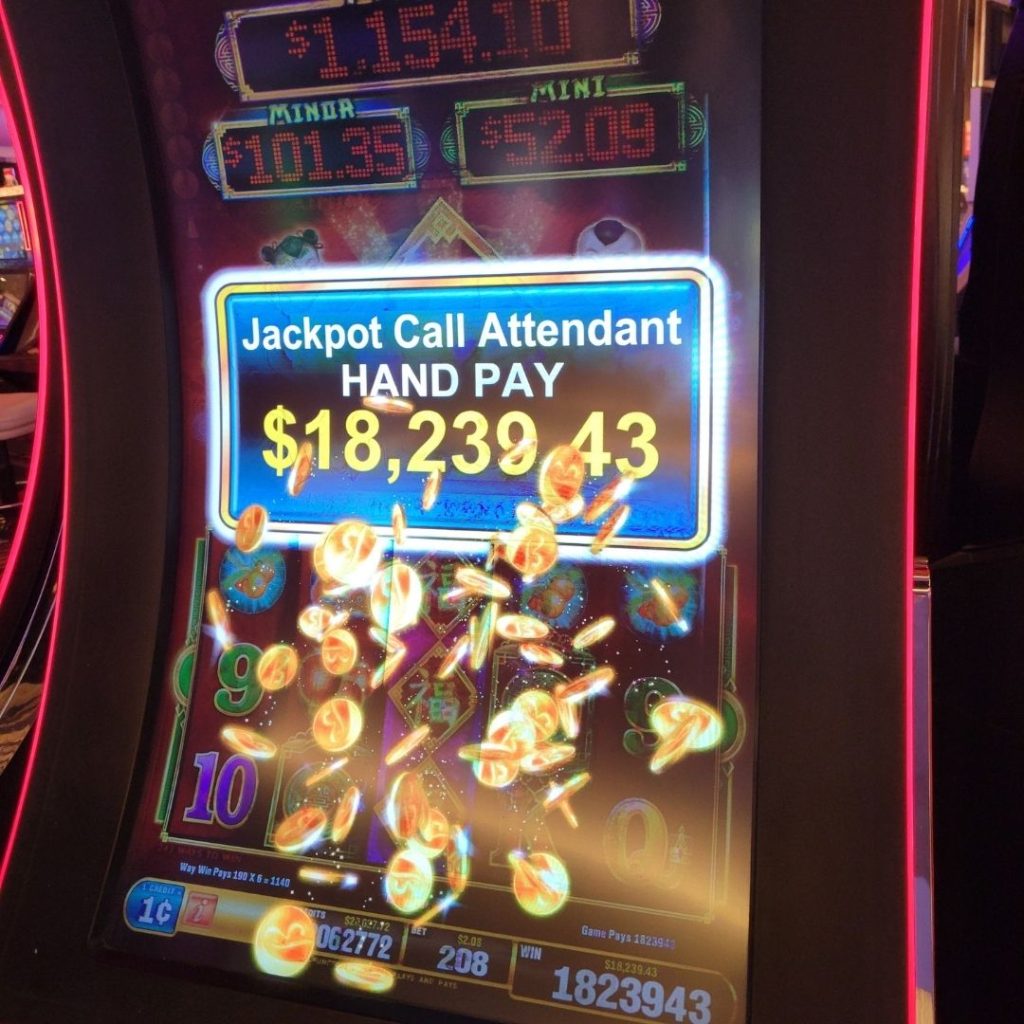
paf casino Poker Room Screenshots
FAQ: Vanliga missuppfattningar om paf poker välkomstbonus
Vad är paf casino?
paf casino är en onlinepokerrum och speloperatör som erbjuder ett brett utbud av pokerspel och turneringar.
Vilka licenser har paf casino?
paf casino är licensierat och reglerat av Spelinspektionen, vilket säkerställer en säker och rättvis spelupplevelse.
Hur fungerar välkomstbonusen hos paf casino?
Nya spelare kan ta del av en generös välkomstbonus på upp till kr200 i bonus med 500 gratissnurr, med en omsättningskrav på 50x spelkrav inom 7 dagar gånger bonusbeloppet.
Vilken är minsta insättningen hos paf casino?
Minsta insättningen hos paf casino är kr12.
Kan jag spela poker på mobilen via paf casino?
Ja, paf casino erbjuder en fullt optimerad mobilplattform så att du kan spela dina favoritspel var som helst.
paf casino verktyg mot överdrivet pokerspelande
Spel är endast avsett för personer som fyllt 18 år. paf casino är licensierat av Spelinspektionen och uppmanar alla spelare att använda det nationella självavstängningsverktyget Spelpaus.se för att hantera sitt spelande. Om du känner att spelandet blir ett problem kan du kontakta Stödlinjen på 020-81 91 00 för kostnadsfri och anonym hjälp. Kom ihåg att sätta upp insättnings- och tidsgränser innan du spelar – spela endast för underhållningens skull och jaga aldrig förluster. Spela ansvarsfullt.
