
bästa casino slots – våra nya casinon 2026
bästa casino slots kommer med ett löfte om en sömlös spelupplevelse från första stund. Registreringen är enkel och verifieringen går snabbt, vilket gör att spelare snabbt kan komma igång. För den som är nyfiken på det senaste erbjuder bästa slots med progressiv jackpot en bekväm väg in i casinots värld.
casino omsättningskrav 2026 — låga omsättningskrav
See also:
- En guide till bästa casino slots 2025 – allt du behöver veta
- bästa slots med progressiv jackpot – fördelar och nackdelar i korthet
- Bonusvillkor & Omsättningskrav för bästa casino slots
- Bilder: Så Ser Nya Rekommenderade Casinon Ut
- Regler för bästa slots på casino på den svenska marknaden
- Så granskar du ett nytt casino: bästa casino slots 2025 som verktyg
- Frågor och svar om bästa slots med progressiv jackpot
- Så skyddar nya casinon spelare med spelgränser
En guide till bästa casino slots 2025 – allt du behöver veta
Game shows, as a genre, represent a fascinating intersection of chance, skill, and human psychology, offering a microcosm of societal values where ordinary individuals are thrust into extraordinary circumstances. The format, deceptively simple in its core premise of questions, puzzles, or physical challenges, belies a complex production machinery designed to maximize tension, engagement, and emotional payoff. From the earliest radio quiz programs of the 1930s, where contestants answered trivia for modest prizes like a new refrigerator or a set of encyclopedias, to today’s multi-million dollar spectacles with elaborate sets, pyrotechnics, and celebrity hosts, the evolution of the game show mirrors broader technological and cultural shifts. The golden age of television in the 1950s brought us iconic shows like ‘The $64,000 Question’ and ‘Twenty-One,’ which, while immensely popular, were later revealed to be rigged, leading to a congressional investigation and a subsequent shift towards lighter, more comedic formats like ‘The Price Is Right’ and ‘What’s My Line?’ This scandal, however, did not diminish the public’s appetite for the genre; instead, it paved the way for a more self-aware, playful approach that emphasized entertainment over pure intellect. The 1970s and 1980s saw the rise of the syndicated powerhouse ‘Wheel of Fortune’ and ‘Jeopardy!,’ which remain cultural touchstones today, their formats so deeply ingrained in the collective consciousness that they are often referenced in other media. The mechanics of these shows are meticulously engineered: the spinning wheel’s random selection, the puzzle board’s reveal, the buzzer timing on Jeopardy!—all are calibrated to create moments of suspense and sudden reversals of fortune. Contestant selection is a rigorous process involving multiple rounds of interviews, personality assessments, and sometimes even lie detector tests, as producers seek individuals who are not only knowledgeable or skilled but also telegenic and capable of articulating their emotions under pressure. The casting directors look for a blend of relatability and eccentricity, favoring teachers, nurses, and small business owners who can serve as avatars for the audience, their triumphs and defeats resonating on a personal level. The psychological dynamics within a game show are equally compelling: the pressure of time constraints, the presence of a live audience whose reactions can influence decisions, and the immediate consequences of every choice create a state of heightened arousal that often leads to either brilliant strategic plays or catastrophic blunders. For example, in ‘Deal or No Deal,’ contestants must decide whether to accept a banker’s offer or continue opening briefcases, a dilemma that pits mathematical expected value against the fear of losing a guaranteed sum, resulting in visible emotional turmoil that is as compelling as any scripted drama. Similarly, in ‘Who Wants to Be a Millionaire?’ the lifelines—’Phone a Friend,’ ‘Ask the Audience,’ and ’50:50’—are not just tools but also social experiments, as contestants weigh the advice of strangers, friends, or probabilities, often revealing their own biases and levels of trust. The economic stakes of modern game shows are staggering; prime-time specials can offer prizes exceeding $10 million, funded by advertising revenue and product placement, which are seamlessly integrated into the show’s fabric, from branded podiums to host-pitched vacations. The production values have escalated to cinematic levels, with elaborate lighting rigs, augmented reality graphics, and immersive sound design that amplify the emotional beats, turning a simple reveal into a heart-stopping moment. Behind the scenes, a team of writers, researchers, and statisticians ensure that questions are fair but challenging, that difficulty curves are properly calibrated, and that the show’s pacing adheres to broadcast standards. The role of the host is pivotal; hosts like Bob Barker, Alex Trebek, and Pat Sajak became beloved figures through their warmth, wit, and ability to put contestants at ease while maintaining the show’s momentum. Their deaths or retirements have been treated as national events, reflecting the parasocial bonds forged over decades of daily viewership. In recent years, the genre has diversified to include reality-game hybrids like ‘The Amazing Race’ and ‘Survivor,’ which combine physical endurance, social strategy, and puzzle-solving in exotic locations, expanding the definition of what a game show can be. Streaming platforms have also entered the fray, with shows like ‘Floor Is Lava’ and ‘The Circle’ appealing to younger audiences through ironic humor and interactive elements, while still adhering to the fundamental appeal of competition and reward. The global reach of game shows is immense; formats like ‘Who Wants to Be a Millionaire?’ have been adapted in over 100 countries, each version reflecting local cultural norms—for instance, the Japanese version often features more complex puzzles and a greater emphasis on group harmony, while the British version is known for its dry wit and stricter time limits. Cognitive scientists and behavioral economists have studied game shows as natural experiments, using data from thousands of episodes to analyze risk aversion, the hot-hand fallacy, and decision-making under uncertainty. For instance, research on ‘The Price Is Right’ has shown that contestants often overbid in the showcase round due to anchoring on previous bids, and studies of ‘Jeopardy!’ have revealed strategic wagering patterns in Final Jeopardy that are not always rational. The educational potential of game shows is also significant; ‘Jeopardy!’ has been credited with increasing general knowledge, and some schools use game show formats in classrooms to make learning more engaging. However, the genre has also faced criticism for promoting materialism, reinforcing stereotypes through contestant selection, and exploiting participants’ vulnerability for entertainment. The infamous incident on a 1990s Japanese game show where a contestant died after a water-drinking challenge led to stricter safety regulations, and several countries now mandate psychological screenings and prize caps. Despite these issues, the appeal of game shows remains undiminished, as they tap into fundamental human desires for validation, competition, and the dream of a life-changing windfall.
bästa slots med progressiv jackpot – fördelar och nackdelar i korthet
Hur vi granskar nya casinon
Att välja rätt nytt casino år 2026 handlar inte om att chansa – det handlar om att förstå hur ett casino utvärderas och vilka kriterier som faktiskt avgör om ett spelbolag är värt dina pengar. Vår granskning utgår alltid från en rad grundläggande parametrar som vi anser vara absoluta minimikrav. Först och främst tittar vi på licens och reglering: ett casino som vänder sig till svenska spelare ska inneha en spellicens från Spelinspektionen. Denna svenska licens garanterar att casinot följer strikta regler kring bland annat spelansvar, insättningsgränser och registrering via BankID. Vi granskar även vilka spelleverantörer som ligger bakom spelen – känner vi igen namn som NetEnt, Play’n GO, Evolution Gaming och Yggdrasil, så är det oftast ett gott tecken på att spelen är rättvisa, underhållande och tekniskt avancerade. En annan kritisk punkt är betalningsmetoderna: ett modernt casino bör erbjuda både traditionella kort- och banköverföringar samt moderna lösningar som Swish, Zimpler och Trustly. Vi kontrollerar också omsättningskrav, bonusvillkor och tidsbegränsningar – alltför ofta gömmer sig oskäliga villkor i det finstilta, så vi läser alltid igenom dessa noggrant. Slutligen väger vi in användarupplevelsen: webbplatsens design, navigation, mobilkompatibilitet och kundsupportens tillgänglighet. Ett nytt casino som brister i någon av dessa punkter åker snabbt ned på vår lista, oavsett hur lockande deras välkomstbonus kan vara.
Licens och säkerhet – grunden för allt
I Sverige är spellicensen från Spelinspektionen det enda som gäller för ett casino som vill ta emot spelare från Sverige. Denna licens är hårdare än någon annan i EU och ställer krav på bland annat hållbara spel, maxgränser för förluster och obligatorisk registrering med BankID. När vi rekommenderar ett nytt casino, kontrollerar vi först att det har en giltig svensk licens och att den är synligt presenterad på webbplatsen. Vi går även igenom vilka oberoende testlaboratorier som certifierar spelens slumpgeneratorer – exempelvis eCOGRA eller iTech Labs – för att säkerställa att spelen inte är manipulerade. Säkerhetsmässigt tittar vi på SSL-kryptering, sekretesspolicy och hur casinot hanterar dina personuppgifter i enlighet med GDPR. Ett casino som inte prioriterar säkerhet är i våra ögon inte värt att spela på. Vi uppmärksammar också om casinot samarbetar med organisationer som Spelpaus.se, det nationella självavstängningsregistret, eftersom det visar att de tar spelansvar på allvar. Alla dessa aspekter vägs samman för att ge en helhetsbild av casinots tillförlitlighet – en helhetsbild som ligger till grund för våra rekommendationer.
jalla casino free spins — höga omsättningskrav | jalla casino
unibet bankid — snabba utbetalningar | unibet casino
Välkomstbonusar och löpande kampanjer
När vi bedömer bonusar på nya casinon, ser vi bortom den lockande första insättningsbonusen. Vi analyserar hela paketet: välkomstbonusens storlek, men framför allt omsättningskravet, vilka spel som räknas mot omsättningen och om det finns tidsbegränsningar. I Sverige är det vanligt med bonusar som har ett omsättningskrav på 15–20 gånger bonusbeloppet, men vi har sett allt från 5 gånger till över 50 gånger – och allt över 35 gånger anser vi vara direkt oskäligt. Vi tittar också på free spins: hur många, på vilka spel, och om vinsterna från dessa kräver ytterligare omsättning. Många nya casinon lockar med generösa välkomstpaket, men det verkliga värdet ligger i hur lätt det är att faktiskt ta ut pengarna. Därför granskar vi även eventuella insättningsgränser, uttagsgränser och hur snabbt uttag hanteras. Ett casino med snabb utbetalning via Trustly eller Zimpler, och utan krångliga verifieringsprocesser, får högre betyg. Vi uppskattar också casinon som erbjuder återkommande kampanjer – reload-bonusar, cashback och turneringar – eftersom det visar att de värnar om sina befintliga spelare, inte bara om nyregistreringar.
Spelutbud, betalningar och kundsupport
Ett nytt casino måste ha ett brett och varierat spelutbud för att kunna konkurrera på den svenska marknaden. Vi letar efter ett stort antal spelautomater från välkända leverantörer, men även live casino, bordsspel som blackjack och roulette, och gärna en sektion med snabba spel som crash games eller andra moderna varianter. Mångsidigheten i spelutbudet är en stark indikator på hur seriöst casinot är.
live casino poker 2026 — odds och sannolikheter
Bonusvillkor & Omsättningskrav för bästa casino slots
- 28% upp till kr250
- 47% bonus och 25 gratissnurr
- 75 gratissnurr vid registrering
- 30x omsättningskrav inom 30 dagar
- 45x omsättningskrav på bonusbeloppet
Bilder: Så Ser Nya Rekommenderade Casinon Ut
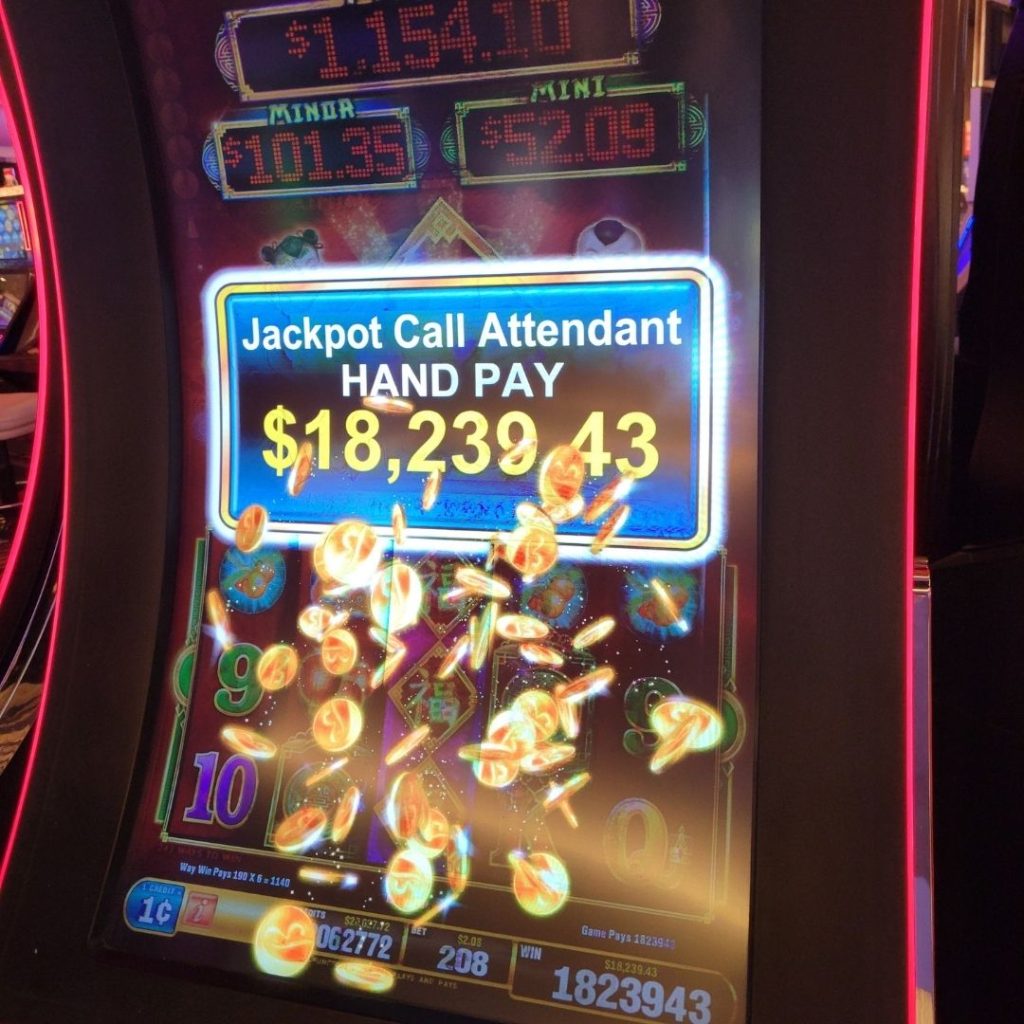
Regler för bästa slots på casino på den svenska marknaden
variants of the same underlying algorithm, each distinguished by subtle shifts in parameter initialization, learning rate schedules, and loss function weighting, are routinely benchmarked against one another across a battery of standardized tasks. In practice, these variants often differ less in their theoretical guarantees and more in their empirical robustness to noise, gradient sparsity, and the specific geometry of the optimization landscape. Some variants adopt aggressive momentum terms that accelerate convergence on smooth basins but risk oscillation near sharp minima, while others favor conservative updates that trade speed for stability, particularly when the data distribution drifts over time. The choice of batch size, for instance, can transform a variant from a noisy stochastic approximator into a near-deterministic solver, and this sensitivity means that a variant that excels on image classification may falter on natural language processing benchmarks where the loss surface is riddled with flat regions and saddle points. Furthermore, the interaction between the variant’s architectural inductive biases and the regularization strategy—whether dropout, weight decay, or spectral normalization—can produce surprising synergies or catastrophic interference. In reinforcement learning settings, the same variant may be adapted with different exploration schedules, entropy bonuses, or target network update frequencies, leading to drastically different sample efficiency and final policy performance. Recent work has also highlighted the role of random seed selection in determining whether a variant lands in a favorable basin of attraction, prompting the use of multi-seed evaluations and statistical significance testing to separate genuine algorithmic improvements from mere luck. For production systems, engineers often maintain a portfolio of variants, each tuned for specific hardware constraints—such as memory footprint, latency, or energy consumption—and they deploy them via a meta-controller that selects the most appropriate variant based on real-time feedback from the environment. This meta-level selection is itself a learning problem, and some systems use bandit algorithms to explore the variant space while exploiting known best performers under changing conditions. The academic literature is replete with papers that propose a new variant, demonstrate its superiority on a handful of curated datasets, and then show that the gains diminish or reverse when the evaluation protocol is expanded to include adversarial perturbations, distribution shifts, or out-of-distribution examples. Consequently, the field has moved toward more rigorous evaluation frameworks, such as model zoos, leaderboards with hidden test sets, and cross-validated hyperparameter sweeps, to ensure that reported improvements are not artifacts of overfitting to a particular benchmark. In the context of generative models, variants may differ in their noise schedules, classifier-free guidance weights, or the use of consistency models versus diffusion steps, and these choices significantly affect the trade-off between sample diversity and fidelity. For example, a variant with a higher guidance weight produces sharper images but reduced diversity, while a lower weight yields more varied outputs at the cost of occasional artifacts. Similarly, in contrastive learning, variants that employ different augmentation strategies, projection head architectures, or temperature parameters can yield representations that are more or less transferable to downstream tasks, and the optimal configuration often depends on the target domain’s label scarcity and semantic granularity. From a software engineering perspective, maintaining multiple variants requires careful versioning, reproducible configuration files, and automated testing to ensure that changes in one variant do not silently break another. Containerization and workflow orchestration tools have become indispensable for managing such complexity, allowing researchers to launch thousands of variant runs in parallel and aggregate results through standardized metrics. Despite these challenges, the proliferation of variants has a positive side: it fosters a healthy exploration of the design space, and the collective knowledge gained from comparing variants often leads to hybrid approaches that combine the best aspects of several. For instance, a variant that excels at fast convergence might be combined with another that provides better final accuracy, using a curriculum schedule that switches between them during training. The concept of variant also extends beyond neural networks to classical machine learning models, where different kernel functions, regularization parameters, or feature encodings are considered variants of a base algorithm, and similar benchmarking practices apply. In the era of large language models, variants are often created by fine-tuning a base model on different instruction datasets, with or without reinforcement learning from human feedback, and the resulting models exhibit distinct personality traits, factual accuracy levels, and refusal behaviors. The evaluation of these variants is particularly challenging because subjective qualities like helpfulness and harmlessness are hard to quantify, and human evaluators may have inconsistent preferences. Therefore, researchers have developed automated metrics that approximate human judgment, such as reward models trained on human comparisons, but these proxies can be gamed, leading to variants that optimize the proxy rather than the true objective. Ultimately, the study of variants is a microcosm of the broader scientific method: it involves hypothesis generation, controlled experimentation, replication, and iterative refinement. Each variant represents a hypothesis about what matters for learning, and the empirical comparison of variants tests those hypotheses under controlled conditions. The practice of reporting not just the best variant’s performance but also the variance across seeds, the sensitivity to hyperparameters, and the computational cost is essential for the community to build upon previous work. As the field matures, we can expect the emergence of standardized variant taxonomies and shared infrastructure that allow researchers to plug in their new variants and immediately see how they compare against a comprehensive suite of existing ones, much like how standardized benchmarks in computer vision or natural language processing have accelerated progress. Until then, practitioners must rely on careful experimental design, open-source code, and detailed documentation to ensure that the variants they report are reproducible and that the comparisons are fair.
Så granskar du ett nytt casino: bästa casino slots 2025 som verktyg
Spelare bör vara medvetna om riskerna med bästa casino slots.
Frågor och svar om bästa slots med progressiv jackpot
Hur bedöms nya onlinecasinon?
Vi utvärderar licenser, säkerhet, spelleverantörer, betalningsmetoder och användarvillkor för att säkerställa en trygg och rättvis spelupplevelse.
Vilken licens bör ett nytt casino ha?
Ett pålitligt casino bör inneha en licens från en ansedd myndighet, exempelvis Spelinspektionen. Det garanterar att casinot följer strikta regler och skyddar spelarna.
Vad innebär omsättningskrav på en välkomstbonus?
Omsättningskrav, ofta 30x spelomsättning, anger hur många gånger du måste satsa bonusbeloppet innan du kan ta ut vinster. Läs alltid villkoren för att undvika överraskningar.
Vilka betalningsmetoder är vanligast hos nya casinon?
De flesta nya casinon erbjuder kort, banköverföring, e-plånböcker och ibland kryptovalutor. Minsta insättning är ofta kr21, men det varierar mellan operatörer.
Hur väljer jag rätt nytt casino?
Fokusera på licens, säkerhet, spelutbud från kända leverantörer, snabba uttag och en bonus som passar dig, exempelvis 500 gratissnurr vid registrering. Jämför alltid flera alternativ innan du bestämmer dig.
casino erbjudanden utan omsättningskrav 2026 — låga omsättningskrav
Så skyddar nya casinon spelare med spelgränser
Spel är endast för vuxna 18+. Spela ansvarsfullt – sätt alltid upp en budget och en tidsgräns innan du börjar, och se spel som underhållning, inte som ett sätt att vinna tillbaka förluster. Verksamheten regleras av Spelinspektionen. Om du känner att ditt spelande blir problematiskt kan du spärra dig via det nationella självavstängningssystemet Spelpaus.se. För stöd och rådgivning, kontakta Stödlinjen på 020-81 91 00 – de erbjuder kostnadsfri och anonym hjälp. Kom ihåg att sätta gränser och ta pauser.
live casino baccarat 2026 — live baccarat online
